Sunday, 16 August 2015

Ubuntu Q&A 04.08.2015

Hello everyone.
I have decided to start a new miniseries on this blog. This is the third post I am making inside of this series and this time I will write about the Q&A that happened 2 weeks ago. This miniseries will be overviewing the regular weekly Q & A's held by the Canonical community team. I don't promise to do this miniseries regularly because of my own time constrictions. I also will not write about every question that was asked, I will only write about questions and answers which I consider interesting. And I will only indirectly report what was asked and how it was answered. You can find those details in the video of the sessions themselves. I will however put a link to the videos(if I forgot the link, please tell me so in the comments). So let's start with the first question.
 
 15:25 Any news on the north American phone yet?
 They are still working on it. It is a priority. 

15:58 When can we download the Ubuntu personal ISO with an installer?
No plans yet. You can download an image onto a USB and boot from the USB already.

18:00 Will Ubuntu touch support snapshots?
Not out of the box yet. Maybe some day.
 
19:00 Will Ubuntu run windows applications without wine? 
No. Can Windows run Linux applications?

19:50 How is the power consumption when compared between Unity8 and Unity7?
Because mobiles are very resource restrained unity8 roughly needs less resources. They don't have exact data yet.

21:00 Will the deb based Ubuntu be discontinued once Ubuntu personal gets stable?
No it won't. Even snappy is built on top of the archives which are Debian based.
 
22:50 At whom is the deb based and at whom is the snappy based Ubuntu targeted at?
Ubuntu-personal is for people who need their os to be less versatile, average users
Ubuntu-deb is more customizable 
 
26:20 In which part of Ubuntu would you like people to be involved?
On the phone, localisation, testing(there is a page on the wiki), core applications, feedback... 

32:20 In Ubuntu snappy will there be anything such as libraries that you will need to build statically?
Yes, there will be because they will have to be self contained, meaning a lot of it will have to be statically linked. But also there will be less dependency hells, if any.

34:00 What are the new features of 15.10?
It will have updated packages. an updated Ubuntu make. And also hidpi support will be very improved

36:00 Can unity 8 and mir be used on the deb based ubuntu since on the phone it uses click?
Yes, there is already an installable session for mir and unity8.

36:45 what is the difference between unity8, next, touch?
Unity8 is the next desktop shell.
Ubuntu touch is the not to be used project name for the Ubuntu phone project(Call it ubuntu phone from now on).
Desktop next was an image preview where they tried to incorporate phone technologies on the desktop and it will soon be replaced by personal.
 
38:40 Gnome has been working on its own application sandbox, has there or will there be any collaboration?
Nothing has happened yet, they could have conversations with them, however their system is very different from Ubuntu's sandboxing.
 
 40:45 When will Ubuntu personal land on Ubuntu phones?
Somewhere around 16.04.
 
42:40 What do you think the landscape will look like for 3rd party application developers by 16.04? 
They feel that it will look great because there will be so many new things. They are looking for general developers that will develop code and documentation. They also said that they already have many developers that just want to participate. They also said they want to make even better documentation and that Ubuntu make will be remade, also the SDK will be further improved. Also they have stated that Canonical is looking for engineer managers that will focus on the developer experience.

44:50 Are workspaces planned for unity8?
They want to reach feature parity with unity7, however they don't know yet.

45:35 On the market there are some mhl cables that connect the meizu with external screens, will that land in Ubuntu, or is there any other way to connect the phone to a screen,is there a problem or a lack of developers to do that?
They are limited by the hardware. They were so far only testing the nexus 4 with such features, so they think there are possible hardware limitations. Wifi and bluetooth have just a terrible experience with that.

47:20 Since sdl2 is used so much for gaming, are there any plans to officially support sdl2 in the ubuntu sdk?
An SDL template already exists on github, and there are example applications. It is though very buggy. It is possible to include it in the SDK, but then they would need to import huge chunks of SDL.

49:25 Canonical seems to have gotten rid of Ubuntu1 just when it was most needed, are there any plans to allow phone or laptop syncing?
Ubuntu1 was really bad with syncing. There are already other syncing applications in the mobile store including Dropbox.

50:30 Is there any communication with KDE over the shashlik approach by running android applications on a real Linux, does Ubuntu consider this?
They don't even know about the technology. It is not on the roadmap yet. They do acknowledge that the Application ecosystem is vital, however they do not want to add it because they are sceptic on how the applications would integrate into the system. They also do not want to be Android copycats. Also by supporting Android applications they would demotivate people from making native Ubuntu applications.


53:35 Will Ubuntu 16.04 be the last Unity7 and deb based version?
No, because everything, including snappy is based on the Debian archives. Unity7 though will eventually be discontinued.

55:24 With all the talk about the phones, where do the tablets stand right now? I.e. the Nexus 10?
Tablets are the stepping stone in their convergence vision. As for the nexus 10, they are not happy with it's GPU.

56:30 Any hope of running snap applications on the deb system for 16.04, it would make it a lot easier for developers to target us?
Technically they could run because Snappy is a very improved Debian packaging system. And they do agree it is important for the developer experience. However Snappy is heavily reliant on sandboxing which just does not exist on the Debian based image.

58:00 Is it possible to switch between standard and personal ubuntu from the login screen, if not will it be possible one day?
No, you will have to dual boot. However you can have both unity8 and 7 installed on the same system at the same time already.

59:30 Should I distribute applications as snapps or debs?
It depends on your target audience. However they do consider the new application store much better than the old one.

1:00:40 Does convergence also mean backwards compatibility with the applications already running on the ubuntu desktop, or should they be repackaged for Ubuntu phone?
It must be repackaged. They are thinking about some compatibilities, but it will have to be repackaged.

Phew, this was a long one.

And here is the video:


Sunday, 9 August 2015

Ubuntu Q&A 14.07.2015

Hello everyone.
I have decided to start a new miniseries on this blog. This is the second post I am making inside of this series and this time I will write about the Q&A that happened 3 weeks ago. This miniseries will be overviewing the regular weekly Q & A's held by the Canonical community team. I don't promise to do this miniseries regularly because of my own time constrictions. I also will not write about every question that was asked, I will only write about questions and answers which I consider interesting. And I will only indirectly report what was asked and how it was answered. You can find those details in the video of the sessions themselves. I will however put a link to the videos(if I forgot the link, please tell me so in the comments). So let's start with the first question.
 
13:44 Is there a forum or a website where members of the community can send their ideas for unity8 desktop?
Actually, yes there is: https://unity.ubuntu.com/getinvolved/design/
Also the developers have said that there exist Ubuntu dedicated groups on google+ as well that you can contact most developers directly on Google+.

15:45 What is the future of flash updates on Ubuntu?
It is a hard decision due to the many flash elements on old websites, however flash will die.

20:27 Will the phone software store replace the software center in the future?
Yes, but it will not happen in Unity7, meaning it will not happen very soon. However the technology for them is a bit similar.

22:34 Will there be a tweaking tool for unity8 to change the size of the icons, also will unity 8 support themes?
There already is such a tweaking tool on the open applcation store for ubuntu touch. It is called tweakgeek(I am not sure if I heard that right from the video though). But so far there are no plans to implement it in the OS itself.
As for themes, unity8 already supports application level themeing, OS level themeing is being worked on and it will come.

27:42 What is Ubuntu phone's goal on the global market in terms of marketshare?
The platform is just a few months old, and there are only 3 devices out yet. So it is still too early to talk about this, but the current market share is of course still low.(In previous statements they have said that market share is not something they are aiming for right now).

30:57 Aside from the scopes initiative, are there any other initiatives to fix the application gap on phones and tablets?
Yes, there was a huge hackathon in China. Work is being done together with universities. Something new will be announced very soon. They are constantly working on improving the SDK, API and other tools. They are communicating with 3rd party developers. However they have mentioned that none of this will come over night. They have also praised the Dekko email client application for being a great example of a good application for the platform.
Also they have mentioned that Linux itself has grown a long way even without binary compatibility with Windows or Mac applications.

34:00 Will we see the return of the 100 papercuts project?
The project actually still exists. You could however make a global jam to make another such initiative with a list of problems, and you could even try to solve them.

36:00 Is there an ETA on mir proprietary drivers?
None.However support is being made on many things, including the fact that GTK applications now work on mir.

41:27 Upuports project, is it good or bad?
It is great. The developers have stressed on how much harder it is to install Ubuntu on a random phone, than it is to install it on a random PC, mostly because some drivers can not be redistributed. They have also praised the OnePlus One port for Ubuntu touch. They have also reminded us that they still have the intent to run Ubuntu Linux on everything "From supercomputers to your toaster." (Libretoast, I am coming)

47:20 What advice can you give to non-programmers to contribute to ubuntu phone?
You can contribute in discussions, you can contribute with your own designs, you can contribute by translating You can test how the devel and proposed images work, you can suggest application ideas(even better if you write project documentation about them).
Also have a look at one of my other blog posts:
http://thebluedrag.blogspot.com/2015/05/what-you-can-do-to-help-linux.html

55:35 Is the hud and global search coming back?
They had nothing specific to say about the HUD, they did however say it would be great if they could implement it somehow, with voice search.

59:00 Will they add easter eggs?
Yes, they said it would be cool.

59:40 Will Firefox remain the default browser on the desktop? There was talk that it would be replaced by Chromium, or that it could be replaced with the phone Web browser?

They have said that they would not be surprised if Firefox was replaced as the default web browser on the desktop. However no such decision has been made. They also said that they would need many discussion and feedback rounds for that. So everything is open.

And here is the link to the video:

Sunday, 2 August 2015

Ubuntu Q & A 28.07.2015 overview

Hello everyone.
I have decided to start a new miniseries on this blog. This miniseries will be overviewing the regular weekly Q & A's held by the Canonical community team. I don't promise to do this miniseries regularly because of my own time constrictions. I also will not write about every question that was asked, I will only write about questions and answers which I consider interesting. And I will only indirectly report what was asked and how it was answered. You can find those details in the video of the sessions themselves. I will however put a link to the videos(if I forgot the link, please tell me so in the comments). So let's start with the first question.

08:00 How many devices with ubuntu have been sold?

The Canonical community team members have said that they do not have the exact numbers of how many Ubuntu devices have been sold, they did however say that they are satisfied with the sales. They also said that sales are currently not their priority, their priority is to get customer feedback, and so far they are satisfied with the feedback.  Michael Hall did also add that he is excited about some of the numbers from the application store, he said that the number of applications and downloads doubles every 4-6 months and that the application store currently has over 1800 applications.

13:10 Voice commands on the phone?

The community team members have said that voice commands will come, however, they are not a priority right now. What little work was done so far is mostly based on pocketsphinx. They are hoping to make voice commands a completely local technology so that no data will be se3nt to servers on the internet, due to privacy concerns.

22:00 Wifi hotspot on Ubuntu mobile devices?

It will probably come with OTA-6
23:40 How long will the BQ e4.5 receive updates?

Their answer was: Indefinitely, or at least as long as it is technically possible. There is no planned EOL target date, however it is a tiny bit dependant on the manufacturer. They did also say that in terms of updates they definitely plan to handle that better than Android does. They have mentioned that this is possible because the system is now well layered into multiple layers, so they are able to update the base system layer without interfering with the OEM layer.

26:30 Will we be able to use KDE plasma mobile alongside Unity 8, the same way we can use KDE plasma 5 alongside unity 7 on the desktop?

The  Canonical engineers have not said a definite yes, but they did seem optimistic about it because, Plasma mobile is able to use the Ubuntu SDK applications,  it was built on top of a Ubuntu touch image, it was another proof that the separation of system layers worked and because current ubuntu touch images still run a upgraded LightDM login manager. However they are still in contact with KDE developers, and they hope that click packaging will work with it. They also said that many small details still have to be figured out, like modifications to LightDM on unity8.

34:10 Will we have a quick camera option and an option for emergency contacts on the lockscreen?

The design team is looking to make the lockscreen more customisable and interactive. Also emergency dialling will be improved. However so far there are no plans to implement a quick camera on the lock screen.
39:50 Will application launch times be improved?

Community team members have confirmed that Canonical is aware of the issue. They have also said that it is internally discussed and they are working on it. They have also said that in their case the issue is not one big issue why applications are launching so slowly, but rather they have many small issues. Some of thema re in apparmor, others in the launching script, the SDK, etc...
The link to the session:
https://www.youtube.com/watch?v=47GczsHH9aI 

The end.

Tuesday, 28 July 2015

Ubuntu phone:Android app support is a double edged blade

When talking about Ubuntu phones, one of the usual comments is that people say: Canonical should enable Android applications to run on Ubuntu phones.
I will admit, initially I liked the idea...until I saw the first counterarguments.
Here are some reasons why supporting Android applications could kill the platform in it's infancy.

1)Other platforms have tried it...And failed.


Windows(phone)-Supports Android applications
Blackberry OS-Supports Android applications
Tizen-is a carbon copy of Android
Sailfish-Supports Android applications
Is any of those mobile platforms a market success? No. Even Windows phone has barely a 3-4% market share. Tizen still could prove itself, but it is a carbon copy of Android.
Would you want to have emulated Android applications on your Ubuntu phone? Probably not. Let me describe you some of the horrors with Android applications on other platforms:
"The Android applications have the feeling of second rate ports, plus most of them are stripped down old versions of the same applications on Android."
"Most of the time the applications are even too confused too decide if they want to use the native or the emulated Android keyboard"

2)Supporting Android applications would be like a slap to the face to existing Ubuntu applications and scope developers

If Canonical decided to support Android applications, they would lose most of their current third party application developers for the phone. Basically you could simply say goodbye to native Ubuntu phone applications.
Why would a developer develop NATIVE applications for Ubuntu touch if he could just develop an Android application, publish it on the Google play market(to a much wider audience). And he could then just publish a second rate port on the Ubuntu application store?

3)You would either have to destroy the security features of Ubuntu touch, or the Android applications would barely work. 


Let me tell you a little bit on how application security on Ubuntu touch works:
Everything is a sandbox.
That means all the applications can not reach data on the phone unless it goes trough something called "The content hub". In other words an application has to be specifically designed for usage with the content hub to reach any data that was not created inside the sandbox of the application.
Since Android applications are not designed with that in mind, that means many Android applications(especially file mangers) would be useless.
An alternative is to destroy the security within click and snappy packages.

4)Scopes would become less-functional

Since Android applications can not communicate with the content hub, that also means that scopes would be unable to reach the data from Android applications via the traditional way, if they could do it at all.
If they hypothetically could that would be a huge hack and potentially a huge security hole.

So to summarise supporting Android applications on Ubuntu phones would probably be a tactical victory but a strategic defeat.

tl;dr Supporting Android applications on Ubuntu phones could be a bad idea, but mostly it could ruin the platform in the long term.

Tuesday, 7 July 2015

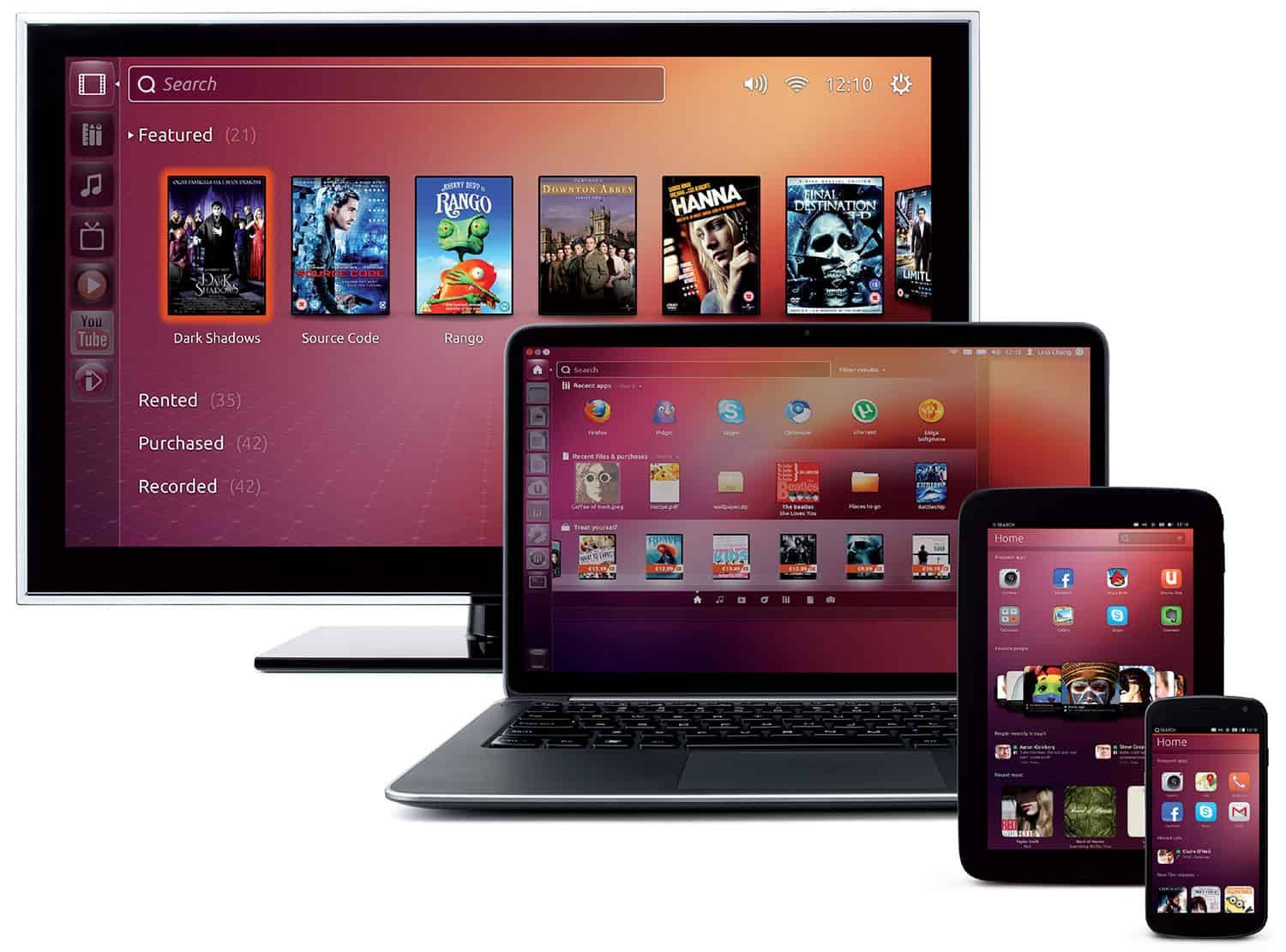
Why Ubuntu unity8/Ubuntu on phones and tablets could be the next hot thing.

Even though I still don't have my own unity8 phone, I have been part of the whole hype around Ubuntu phones. My own Ubuntu story started with Ubuntu 12.04 and around those times the first rumours of Canonical working on a mobile variant started going around. Or rather that was read from Mark Shuttleworths words. It turned out they did work on mobility but not a variant ;) .

I even made some applications for the new platform which landed me on this list(on the bottom under the name Mario Kamenjak):
https://developer.ubuntu.com/pioneers
Sadly my shirt has not reached me yet(but I blame Croatian customs, it's a long story that involves certain accents that are only in the Croatian alphabet in my address). Keep in mind that although certain phones already are on the market and even selling above expectations, the whole Ubuntu on mobiles project is still in it's alpha/beta stage. Canonical still hopes to have a convergence ready phone before the end of this year.
But well enough with that for now here are the actual reasons on why I believe Ubuntu has a more than decent chance to survive the global smart-phone market.

1.Convergence


What Ubuntu engineers consider convergence is that they are trying to make one code work on every platform. The usability goal for that is that you can seamlessly switch your devices from desktop to mobile mode and vice versa. That means you only need one device either a tablet or a phone and that device can serve as a full powered desktop machine as well. Depending on which device mode you will be currently using the applications will adapt, And also in some circumstances you will even be able to use desktop applications on your phone or tablet, probably even with an interface that adapts itself. Also Ubuntu is aiming for 100% convergence. Unlike a certain other competitor who will even in it's next operating system have a dedicated mobile version, once Unity8 merges with desktop Ubuntu there will be no special "Ubuntu for mobiles". There will be only "Ubuntu" with one single code-base.
But why hasn't unity8 yet been merged with the main desktop? The answer is stability. And the fact that a chunk of the planned feature set has not yet been implemented.

2.Scopes

Scopes are aiming to provide an innovative way for users to get their information. No need for web applications, you get your information directly to your home screen. Scopes have also the aim to reduce the amount of "bloatware" the OEM's make by giving them the alternative to make custom scopes which are already parts of system libraries. Also Canonical engineers are currently thinking on how to make scopes more interactive, or even how to preview some information more efficiently. Currently when you click or tap on some article in a scope it opens the web browser, however Ubuntu engineers are trying to think of ways how to replace the web browser in such interaction with scopes.

3.Canonical's ecosystem


Canonical will not enter the smart-phone market with empty hands. The number of application in Ubuntu's mobile application store is already in the thousands. Plus you will be able to use all the desktop applications as well. Also over the years Canonical has been jumping trough hoops to build up it's ecosystem. There is Ubuntu snappy core, and even the whole snappy buzzword with everything that comes with it and there are Canonicals IoT efforts. They have been in talks with the bigger chunk of the mobile industry, many OEM's and as I have read "Network carriers are literally waiting to jump on it." The current Ubuntu Desktop will also be a great contributing factor to the phone ecosystem.

4. Mobile computers, not phones


I have made several polls about how smart-phone users use their phones. I have asked people if they use their smart-phones more as phones(calls and texting) or as computers(everything else). Even though I expected them to say that they use them more as computers, the results were still shocking. The  overwhelming majority (85%) stated that they use their smartphoe as a computer more often than they use it for it's phone capabilities. It seems that calls and SMS have become just another feature.
And this is exactly where Ubuntu's convergence will come. With it your smart-phone will actually be a computer (even a desktop one). You have a full powered traditional Linux, not a cut down and hidden beneath several layers one on your phone.

5. Innovation


As you may have noticed I have been following this roject quite extensively. I have been reading the news, I have visited and asked them questions in Q&A sessions and I even have many of their engineers and community personnel available on social networks(those guys quite like Google+ like I do). And other than the scopes and convergence mantra there is  another third mantra: "We aren't copy cats." Ubuntu unity8 has some revolutional changes. When talking with Ubuntu engineers none of them wil take the words "But this is how Android/WP/iOS do it." as an argument. Because if you want to make a better product you have to risk to try and make something that is better and not just equally as good. More and more customers are also becoming bored by current smart-phone designs, and there is Ubuntu's chance as well, this is where scopes jump in.

6. It is easy (and fun) to develop for


This is a very good one. It is extremely easy to develop applications for Unity8. The programming languages you can use are QML, HTML5, python, C++, C,javascript and there is support for Java files. But the good part is that there are QML and HTML5 API's. Rumours are that even a C++ API might come but I have heard that from only one person. It is a rarity that a Linux distribution provides an API. And now another great thing...Every first time Linux programmer learns the pain of how hard it is to package .deb or .rpm files. That is completely gone, Ubuntu's .click and soon to be .snappy packages will be packaged in seconds.
Also I really like QML. To demonstrate how easy it is I will just tell you this story. I used to be a Java developer. However I instantly fell in love with QML's syntax. When I was making my first Ubuntu application with QML all I had to do was to download and install the Ubuntu SDK, read 2 tutorials, package the application and then I sent it to the store where it was approved in seconds. All of that happened in 45-60 minutes.
For those of you who want to develop applications for multiple operating systems, there is an HTML5 API.

That is it. I hope I haven't missed anything and I hope the article was interesting :)


Saturday, 6 June 2015

Smartwatch fad?

With the start of the smart-watch fad(it is still a fad as it is relatively new IMHO). Everyone thinks it is the new tablet and smart-phone, however Tablets were just a fusion of two already existing technologies (smart-phones and Ultra mobile laptops) and smart-phones were basically upgraded phones(everyone already had a habit of using phones). Everyone is hyped up about smart-watches.

However everyone forgets that the vast majority of people don't even have a habit of wearing watches. Some young people people even(myself included) never had such a habit and consider wearing watches uncomfortable.
In my opinion smart-watches don't offer anything that a smart-phone can't offer you. Some of you will say that it is tiresome to get out your phone out from your pocket,but that argument really only works with summer clothing. When you have long sleeves it is equally tiresome to roll your sleeves as it is to get out the smart phone from your pockets. Plus it makes you wear one more device.

So I have prepared a poll on the side of this blog post,please tell me your opinions on whether you will buy a smart-watch. As for myself, I just consider it a gimmick which I am not interested into. I am much more interested into augmented reality technologies like smart-glasses i.e. Google Glass and HoloLens. Though Google Glass seems to be design wise more something to take out on a date with friends so I would prefer it over HoloLens. I can't wait for Google's Glass 2. Now that might be a revolution.

Friday, 15 May 2015

What you can do to help Linux?


Let's face it today there are many people who are very enthusiastic about cutting edge technologies like GNU+Linux. However many of them have only vague ideas about how they can contribute to Linux and how they can help Linux establish a better position on the desktop market.
Well don't worry,there are many. Here are some in a top 10 list.

1) Write documentation

If you are a programmer(even not the most experienced one) the best thing you can do is to write proper documentation for your software. The reason for this is that by doing that you lay the groundwork for the rest of this list,especially for number 2. Also it does not have to be your own software. In the Linux world there are many libraries, API's, SDK's. In fact most good Linux developers are accustomed to using their actual Operating system as their development environment. However the problem is that many libraries, API's and SDK's and such are not well documented. Sometimes not even documented at all. This presents a hurdle for anyone developing third party applications who is not at least a seasoned programmer, and even they find it highly uncomfourtable. By writing documentation you are immensely helping other programmers. Don't forget to write many code examples in your documentation. Everything from hello world examples to complex algorhythms.

2)Program

Another great way to contribute to Linux is to write software for it. Just think about how nice it would be to have an application that does this and that and start writing. Or if you aren't up to writing a whole new application you can just join the developers of some other application if it is open source,or you can fork other applications as long as you credit the authors. Of course all of this in the case that the application is open source. Or you can join the developers of a Linux distribution. You know a great CLI program but want an interface for it? Why not write one yourself? Or if you feel up to it,the Linux kernel and base system developers are always looking for fresh recruits. However the main issue right now for desktop Linux is the lack of 3rd party support. So ideally you should develop 3rd party applications, and ideally provide an API from your application and its libraries.

3)Package

Pacakging is the process of transforming software from it's source code form into a more easily installable software package. The most common Linux software packages are known as .deb and .rpm.
Linux is very convenient for installing software. You just open up your software center, look around for your desired application for a bit and click install. Installing software on Almost every Linux distribution is no harder that installing software on your smartphone. Then for some software which is packaged but not on your software center, you have to use some google-fu, download the right package, double click on it and install it. However once in every while you will find some unpackaged software and to install such software, it can be a hassle. Especially for novice users. If you decide to do some packaging work by packaging some as of yet unpackaged software you will make the life of many Linux users a lot simpler. You can even go a step further and try to submit your packages to software repositories of some of the more popular Linux distributions.

4)Spread the word

Desktop Linux is still not a common household name.Most people outside of technology circles still don't even know it exists. Go out there on the internet, write blogs, communicate with people who are not Linux users. Of course,don't be annoying with it, however as soon as the topic arises or when you see an opening to start the topic, why not? Tell them how it is free(as in freedom and very often as in free beer), stable and secure. How people who invest a few minutes are able to find Linux distributions tailored for them, and how when using open source it is the computer that serves the user, not vice versa. Just remember, more users means more developers and more power users. If those developers are able to create something of value on closed platforms, just imagine what beauty could they make on an open platform like Linux.

5)Send bug reports

Some people have a preconceived notion that programmers don't want bug reports. They could not be more wrong about it. A good programmer really loves well written bug reports. Usually he will try to help even with not well written bug reports,but most of the time that is just not possible. Most Linux distributions have implemented bug report systems that do most of the work for you. In a well written bug report you provide detailed information about your hardware, the software you are using, the operating system you are using it on and detailed steps on what you did that triggered the bug. This allows the developer to reproduce the bug and subsequently fix it. And by sending bug reports you may accidentally even find out that the bug was already fixed or a workaround for it exists if many people already encountered the same bug as you did.

6)Donate

Most open source software is given to the user for free(as in free beer).However developers also need food. And there are usually other costs, like server upkeep. Although open source developers have other options for income(like ads or selling support for their software), donations can help greatly as well. And if you want a developer to support a certain device, you can even donate that device.

7)Translate

Even if English is the most widespread language in the world.Even if English is the language of the Internet, some people are still quite uncomfourtable with using software that is not in their mother tongue. And while most Linux distributions offer translations to most of the worlds languages, most 3rd party software is not translated, and if it is the quality of the translations is debatable.

8)Write tutorials

There are many new users on Linux every year. Also often software changes, which changes the users workflow. So many users will always appreciate a well written tutorial. Remember that when writing a good tutorial it is always better to guide the user by his hand.

9)Help people use the software

Because every moment Linux gains so many new users, those users often encounter problems. It would be beneficial if you would roam the forums or various help websites for Linux and try to answer some of the many calls for help Linux users have.

10)Be part of the community

Remember that Linux is a community driven project. In fact it is often better described as a movement than as a single operating system(which it isn't,every one of the 1000's of Linux distributions is its own system). Go out there and let your voice be heard. The different people leading software projects based on Linux usually keep track of the opinion of the community. In fact the community itself is usually punishing to those who don't listen. So your opinion might change the Linux world for the better! Just go out there, roam the forums, write blog posts like these etc...

So those are only guidelines. However if you do follow them, you are probably doing the right thing. And who knows,maybe one of those open source companies notices you or a company in need of a Linux administrator notices you as well, so you finally get your Linux dream job! ;)